


PhD Defense
PhD Defense - Benjamin Raynaud
Lundi 16 novembre 2026 à 14h
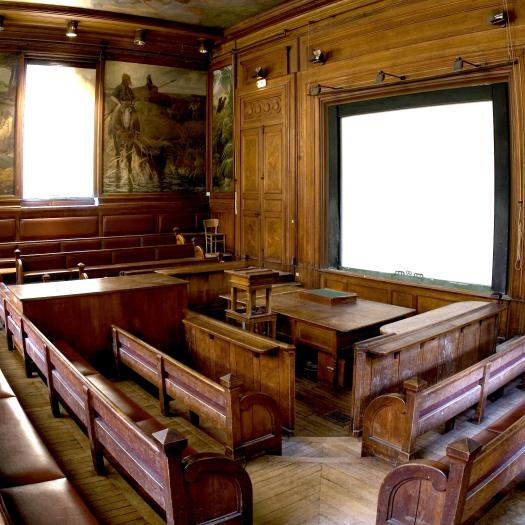
La soutenance aura lieu à l’Orangerie du MNHN, 43 rue Buffon, 75005 Paris
The jury will be composed of:
Sophie Warny (Professor, Louisiana State University), rapporteuse,
Pierre-Olivier Antoine (Professeur, Université de Montpellier), rapporteur,
Francisca Oboh-Ikuenobe (Professor, Missouri University of Science and Technology), examinatrice,
Vincent Lebreton (Professeur, Muséum national d’Histoire naturelle), examinateur,
Anaïs Boura (Maître de conférences, Sorbonne Université), directrice, invitée,
Carina Hoorn (Associate professor, Universiteit van Amsterdam), directrice,
Alexis Licht (Chargé de recherches, Centre national de la recherche scientifique), co-encadrant,
M. Serkan Akkiraz (Professor, Kütahya Dumlupınar Üniversitesi), co-encadrant, invité.
Abstract
The Paleogene is a key period in Cenozoic biotic and climatic history. Until the middle Eocene, Eurasia was divided into three mammalian biogeographic provinces: Europe, Balkanatolia (modern Balkans and Türkiye), and Asia. This partitioning ended with two major faunal turnovers, both characterised by the arrival of Asian taxa: the Balkanatolian faunal turnover, during the Bartonian, and the European faunal turnover, around the Eocene-Oligocene Transition (EOT). It has been proposed that the extinction of these endemic faunas was not driven by active competition with incoming taxa, but rather than Asian immigrants were favoured by the opening of the environments, linked to the global cooling and aridification. As powerful environmental and climatic proxies, plants provide critical insights into these debates.
First, we propose the creation of a new database of Paleogene Eurasian pollen and spores to address the lack of taxonomic references and identification tools for this interval. It compiles 176 taxa, 68 descriptors, 366 character states, 520 photographs and 278 new explanatory diagrams. By standardising character descriptions, it establishes a methodological foundation for large-scale comparisons of palynological assemblages, thereby improving our understanding of the evolution of Paleogene Eurasian floras.
Second, the study of the Bultu-Zile palynoflora (Lutetian, Türkiye) offers a unique insight into Balkanatolian inland environments. This is the first palynological assemblage from the Eocene of Balkanatolia deposited in a freshwater setting rather than at the end of the fluvial system. It includes notable first regional occurrences of Azolla (Salviniaceae) and Corsinipollenites oculusnoctis (Ludwigia, Onagraceae). The assemblage reveals environmental and climatic continuity between the south of western Europe and of central Asia, and Balkantolia: mangroves along the shoreline, evergreen broad-leaved forests inland, and wet temperate conditions with wet and warm summers, mimicking a monsoon climate. This continuity suggests that the persistence of faunal endemism among these three provinces was not due to regional environmental differences, but rather to insular isolation.
Finally, the palynoassemblage of the Apt Basin (France) sheds light on the evolution of European floras and climate around the Eocene-Oligocene Boundary (EOB). During the middle Priabonian, the climate got cooler and open oak groves appeared. This was followed by a drastic aridification phase, evidenced by the complete desiccation of the lacustrine system. During the late EOT, the climate re-humidified, as indicated by the filling of the lake, and temperatures, more variable, re-increased. This trend continued through the Early Oligocene Glacial Maximum (EOGM), with the return of the open oak groves. This sequence aligns with the absence of drastic floristic turnover around the EOB that was previously documented in palaeobotanical records. The regional attenuation of global climatic trends since the EOB may have resulted from the episodic activation of the Atlantic Meridian Overturning Circulation (AMOC).
The Paleogene Eurasian faunal turnovers cannot be fully explained by climatic and floristic changes alone. First, the persistence of Balkanatolian faunal endemism appears to have been driven by insular isolation. Second, in Europe, our results challenge the hypothesis that a brutal opening of environments was the primary driver of the EOT faunal turnover. This underscores the necessity of integrating environmental, climatic, and palaeogeographic dynamics to comprehensively understand the biogeographic evolution of mammalian faunas.
