


PhD Defense
PhD Defense - Tom Forêt
Jeudi 12 novembre 2026 à 14h
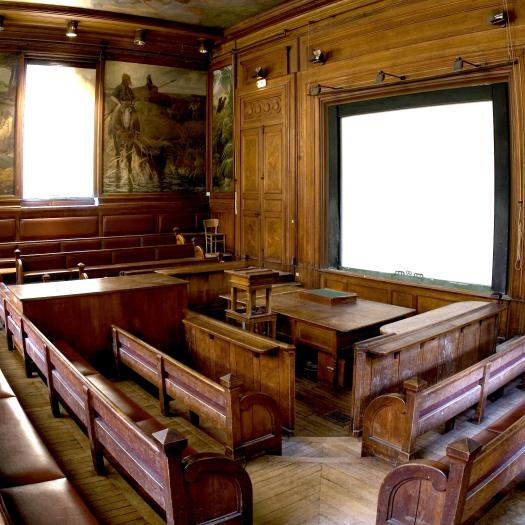
Salle Fourcade, Campus Pierre et Marie Curie (Sorbonne Université-Jussieu, 4 place Jussieu 75005 Paris), Tour 46-56, 5e étage
The jury will be composed of:
Abstract
Archosauromorpha is a widely diversified clade of reptiles that originated during Permian. Their extant representatives are birds, notably diverse in morphology and ecology, and crocodylians, which have a reduced number of species and a generally semi-aquatic ambush predator ecology but remain a major component of trophic networks. The fossil record of archosauromorphs showcases a highly diverse evolutionary history, marked with faunal turnovers and shifts in evolutionary dynamics. This thesis is focused on two major elements: the first is centered on crocodylomorph evolution during mesozoic. Previous attempts to uncover common patterns in the evolution of Mesozoic crocodylomorphs have remained relatively unconclusive, lacking a clear consensual common ground. This study complements the work of Paul Aubier on Notosuchia and focuses on two major Mesozoic crocodylomorph clades: semi-aquatic Tethysuchia and more marine-oriented Thalattosuchia. These studies find that ecological specialization is fundamental in their evolutionary history. While tethysuchians benefit from the Cretaceous/Paleogene extinction crisis and fill the ecological niches previously occupied by marine reptiles, acquiring specialized durophagous diets, thalattosuchians specialize heavily in more macrophagous diets after a faunal turnover during Lower Jurassic. This specialization is later associated with notable size range extension. The second part of this manuscript is focused on the evolutionary dynamics of archosauromorphs from their Permian origin to Sinemurian. We analyse further the impact of notable Triassic events on the evolution of archosauromorphs. The Carnian Pluvial Episode occuring at circa 234-232 has a multilayered imfluence on the evolutionary dynamics of archosauromorphs, allowing dinosaurs to radiate and facilitating the later diversification of crocodylomorphs. This event possibly triggers a chain of successive size increases associated with niche filling. We generally find that the impact of the EndTriassic Event among basal archosauromorph clades is more nuanced than previously thought, with potential events occuring earlier at the Norian/Rhaetian transition. An apparent size reduction is observed in the immediate aftermath of the crisis but seems to be more associated with the extinction of large predatory clades that are replaced over a longer period of time. A common point of interest among the two parts of this manuscript revolves around the treatment of stratigraphic information. We start by using conventional stratigraphic intervals and progressively narrow our stratigraphic intervals, first by using more restrictive constraints, then by constructing a stratigraphic database on a rather large taxonomic sample spanning over 60 million years and then considering the potential influence of the Signor-Lipps effect by computing the probable age of extinction of emblematic clades
