


PhD Defense
PhD Defense - Emma Guyonneau
Jeudi 10 décembre 2026 à 14h
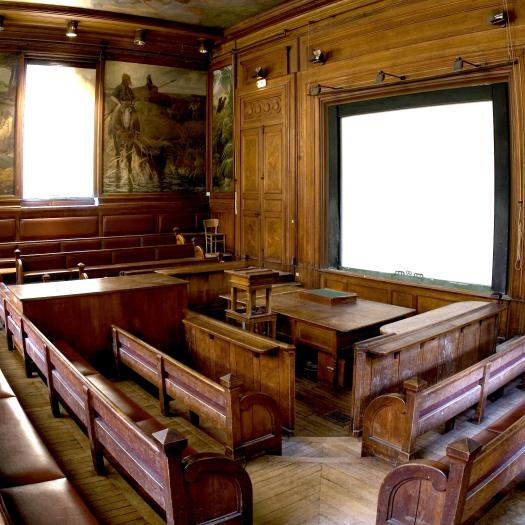
Sorbonne Université, Campus Pierre et Marie Curie, amphithéâtre Astier (bâtiment Esclangon), 4 place Jussieu 75005 Paris.
The jury will be composed of:
Irina RUF, Professeur Senckenberg Society for Nature Research, Rapporteuse
Philip COX, Associate Professor University College London, Rapporteur
Sophie MONTUIRE, Directeur d’études Ecole pratique des Hautes Etudes/Université Bourgogne Europe, Examinatrice
Vincent LAZZARI, Maître de conférences Université de Poitiers, Examinateur
Guillaume BILLET, Professeur Muséum national d’Histoire naturelle, Directeur
Helder GOMES RODRIGUES, Chargé de recherche CNRS, Co-encadrant de thèse
Abstract:
Evolutionary convergences, where distantly related lineages independently evolve similar traits, have long fascinated biologists. Hypsodonty, i.e., high-crowned cheek teeth, is a textbook example of convergence in mammals. This dental trait has been documented across numerous extinct and extant herbivorous mammalian orders, with evidence suggesting multiple independent acquisitions throughout the Cenozoic from the brachydont ancestral state. Hypsodonty is widely interpreted as a specialisation to withstand a diet rich in abrasive items, with high crowns prolonging the functional life of a tooth. While it is well-known that hypsodonty can be highly convergent in herbivorous mammals, its exact prevalence, growth dynamics and mechanisms allowing its accommodation in the cranium remain poorly documented. This thesis explores these different patterns related to a hypsodont dentition in a model group: rodents, the most speciose mammalian order. Rodent species occupy a wide array of ecological niches, are found in diverse environments, exhibit diverse (mostly herbivorous) diets and a broad range of life history traits (e.g., body mass, precociality, lifespan). Hypsodonty is notably common within this order, but precise quantification of its occurrences is lacking, precluding a comprehensive understanding of its convergent nature. Chapter 1 presents a combined bibliographic and morphometric approach to address this gap. A comprehensive literature review of crown height in over 350 extant rodent genera and their closest extinct relatives is performed. Recognising inconsistencies in the categorical description of the trait, measurements of the hypsodonty index are also conducted on a selected sample. Both categorical and continuous datasets are used for ancestral state reconstruction, revealing over 60 independent acquisitions of hypsodonty. Phylogenetic comparative methods are then used to evaluate how rodent hypsodonty correlates with ecological and biological traits commonly linked to this dental specialisation. Chapter 2 focuses on the integration between a hypsodont tooth row and the cranium. High dental crowns occupy a larger space in the cranium, which may cause modification in cranial anatomy to accommodate them. Using 3D geometric morphometrics, the covariation between dental and cranial shape is evaluated. First, during growth, by comparing developmental series of brachydont and hypsodont closely related species. Integration is then studied at the evolutionary scale with a sample representing 25 independent acquisitions of hypsodonty across rodent phylogeny. Sensory structures and neurovascular canals are especially scrutinised. The results reveal that some of these structures, in particular the size of the olfactory turbinals, show significant deformation in hypsodont species compared to brachydont ones. Most interestingly, clades that independently acquire hypsodonty show analogous modifications in cranial architecture, regardless of phylogenetic relatedness and ecological preferences. Finally, the link between crown height, dental growth and life history traits is explored through dental histology in Chapter 3. Studies suggest that hypsodont teeth are formed via prolonged enamel secretion and that this shift in dental development comes with an overall acceleration of life history. Enamel deposition forms daily increments that can be measured to assess growth-related parameters. This exploratory approach highlights technical challenges in applying a protocol common for large herbivores to smaller-sized rodents. Yet, it also demonstrates the potential of this approach for accessing crown formation dynamics and suggests that increases in crown height are associated with faster enamel secretion. Using rodents as a model, this thesis characterises the evolutionary prevalence of hypsodonty and shows that this highly convergent trait is associated with repeated patterns of cranial accommodation, dental growth and life history.
